Blog
Why Shanks’ Sword Name “Gryphon” Sparks the Ultimate One Piece Power-Scaling Debate

Ask any longtime One Piece fan to name the most argued-about sword in the series, and you’ll get a surprising answer. It isn’t Zoro’s Wado Ichimonji, and it isn’t even Mihawk’s legendary Yoru. It’s Gryphon, the comparatively obscure blade carried by Akagami no Shanks. Gryphon has appeared on panel only a handful of times, has never been given a full origin story, and hasn’t even been officially ranked by Eiichiro Oda in any databook. And yet, on Reddit threads, Quora Q&As, and YouTube power-scaling videos, Gryphon is discussed with the same intensity usually reserved for the series’ most iconic weapons.
Why does a sword we barely see generate so much debate? The answer lies in what Gryphon represents rather than what it actually does. Because Shanks is widely considered one of the strongest characters in the entire series — a man who reportedly holds Haki abilities on par with, or exceeding, the likes of Kaido and Whitebeard — every time he draws Gryphon, fans are forced to ask a deeper question: is Shanks a true swordsman in the tradition of Mihawk and Zoro, or is his blade little more than a conduit for something far more terrifying — his Conqueror’s Haki? This single question has split the fandom for years, and it’s compounded by two additional mysteries: Gryphon’s unconfirmed Meito classification, and its conspicuous lack of Black Blade status despite Shanks’ monstrous power level. Together, these three threads make Gryphon one of the most quietly fascinating weapons in the Grand Line.
Swordsman vs. “Haki-Man”: What Is Shanks Actually Doing With Gryphon?
To understand why this debate is so persistent, it helps to compare Gryphon directly to Dracule Mihawk’s Yoru. Mihawk is unambiguously the World’s Strongest Swordsman. Every technique he demonstrates — footwork, blade angle, the way he parries attacks many times his own size — is rooted in decades of dedicated swordsmanship. Yoru isn’t just a weapon; it’s an extension of Mihawk’s identity and the culmination of a lifetime spent perfecting the art of the blade.
Shanks presents a very different picture. In his most memorable displays of swordsmanship — his clash with Whitebeard aboard the Moby Dick, and his devastating use of Divine Departure (known in Japanese fan circles as Kamusari) against the Beasts Pirates in Wano — the emphasis rarely feels like it’s on technique. Instead, viewers are left staring at the sheer scale of destruction: shockwaves that rattle the sky, enemies collapsing before a blade even reaches them, and a general sense that the sword strike is secondary to something else entirely happening underneath it.
This has led to one of the most popular fan theories on forums like Reddit’s r/OnePiece: that Gryphon functions less like a traditional weapon and more like a conductor for Shanks’ Conqueror’s Haki. Under this theory, the sword itself doesn’t need to be exceptionally sharp or special because the true damage is being dealt by Haki being funneled and focused through the blade at the moment of impact. If this is accurate, it would mean that nearly any sturdy weapon in Shanks’ hand could achieve comparable results, and Gryphon’s specific design, material, or forging history would be almost irrelevant to his overall combat effectiveness.
Opposing fans push back on this reading, arguing that it undersells Shanks’ actual swordsmanship. They point to smaller, more controlled moments — such as when young Shanks lost his arm protecting Luffy, an act that still required precise blade-handling under pressure, or the fact that Shanks was already carrying and training with a sword decades before his Haki reputation was fully established. In this view, Shanks is every bit the technical swordsman that Mihawk is; he simply doesn’t need to rely purely on technique because his Haki gives him an additional, terrifying layer of offense that most swordsmen in the series simply don’t have access to.
A few key discussion points repeatedly come up whenever this debate resurfaces online:
- Blade visibility: Gryphon is drawn with far less detail and screen time than Yoru or Enma, making it harder for fans to analyze its actual cutting properties.
- Haki-first storytelling: Oda consistently frames Shanks’ power through Haki — particularly Conqueror’s Haki — rather than swordsmanship feats, which skews fan perception toward the “Haki-Man” theory.
- Comparison to Zoro: Zoro’s growth arc is built entirely around swordsmanship mastery, which makes Shanks’ more Haki-centric fights feel qualitatively different by contrast.
- Real combat data is scarce: Shanks has had very few full-length fights shown on panel, so fans are largely extrapolating from brief, high-impact moments rather than sustained battles.
Ultimately, both camps have legitimate textual evidence, and Oda has been deliberately vague on this point, which is exactly why the debate refuses to die down.
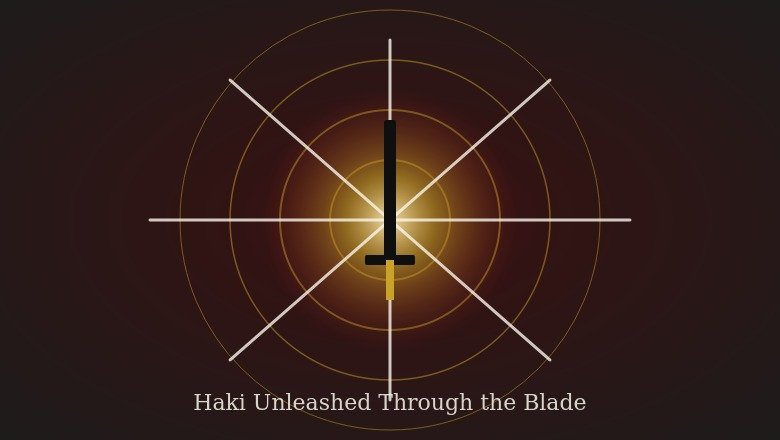
Here’s a quick side-by-side look at how Gryphon compares to two of the series’ other most-discussed blades:
| Sword | Wielder | Confirmed Meito Rank | Black Blade Status | On-Panel Frequency |
|---|---|---|---|---|
| Gryphon | Shanks | Unconfirmed | Not a Black Blade | Rare |
| Yoru | Dracule Mihawk | Saijo O Wazamono (Supreme Grade) | Not a Black Blade | Frequent |
| Enma | Roronoa Zoro | Saijo O Wazamono (Supreme Grade) | Confirmed Black Blade | Frequent |
This table highlights exactly why Gryphon stands out: it’s the only one of the three without an official rank, and despite Shanks’ power level, it’s the only one that has never shown any sign of the Haki-darkening process associated with Black Blades.
A common sentiment paraphrased from long-running Reddit power-scaling threads: “If Gryphon isn’t ranked yet, that’s not proof it’s weak — Oda tends to explain sword lore only when it matters to the plot, and Shanks’ full backstory clearly hasn’t been told yet.” — Paraphrased community take, r/OnePiece discussion
The Mystery of Gryphon’s Meito Rank & Black Blade Status
The second major source of controversy surrounding Gryphon involves its formal classification. In the One Piece world, swords are ranked according to a tiered system: Wazamono (Skilled Grade), O Wazamono (Great Grade), Saijo O Wazamono (Supreme Grade), and finally Kokuto, or Black Blades, which represent an entirely separate category tied to a wielder’s Haki rather than the sword’s original forging quality. Famous examples include Zoro’s Enma, Kozuki Oden’s twin swords, and Kaido’s Haki-infused club.
Despite Shanks being one of the Four Emperors and possessing what most fans consider top-tier Conqueror’s Haki, Oda has never confirmed Gryphon’s rank in the manga, an official databook, or a Vivre Card. This omission is unusual precisely because Shanks is such a prominent character. Fans have naturally filled this information gap with speculation, and the most common assumption is that Gryphon must be Saijo O Wazamono, simply because it feels implausible for a Yonko-level pirate to carry anything less. However, without direct confirmation from Oda, this remains fan theory rather than established canon — and pointing this out has become something of a running argument whenever Gryphon comes up in discussion threads.
Even more puzzling to fans is the fact that Gryphon has never been depicted as a Black Blade. Black Blades form over time when a swordsman’s Haki gradually seeps into and darkens the metal through prolonged, intense use. Zoro’s Enma is the most prominent modern example, and it’s explicitly stated that a wielder must be exceptionally powerful for a blade to undergo this transformation. Given that Shanks is frequently ranked among the strongest characters in the entire series, many fans expected Gryphon to have blackened long ago — especially considering how many decades he’s presumably wielded it.
Several competing theories attempt to explain this apparent contradiction:
- Restrained Haki output: Some fans believe Shanks may deliberately hold back his Haki during most sword strikes, preventing the gradual blackening process from occurring.
- A different Haki application style: Others suggest Shanks channels his Haki more broadly around his body and surroundings (as seen in Divine Departure) rather than concentrating it specifically into the blade’s edge over time.
- Unrevealed lore: A simpler explanation is that Oda simply hasn’t addressed this detail yet, and Gryphon’s true nature may be revealed later in the story, particularly as the series approaches its climax.
- Design intent: A few fans argue that Oda may be intentionally keeping Gryphon understated so that Shanks’ overall threat level is conveyed through Haki and presence rather than flashy weapon lore, consistent with his generally understated characterization compared to other Emperors.
This lack of concrete information hasn’t slowed the debate down — if anything, it has intensified it, since fans are essentially arguing from incomplete data, which tends to produce longer and more passionate threads than debates with clear, canon-confirmed answers.
A frequently paraphrased counterpoint from Quora discussions: “A blade doesn’t have to be black to be terrifying — Shanks lost an arm to a Sea King and still runs the New World; his sword’s color was never going to be what defines his threat level.” — Paraphrased community take, Quora One Piece thread
Why This Debate Keeps Resurfacing Across Fan Communities
Part of what makes the Gryphon debate so durable is timing. Shanks’ role in the story has expanded significantly in recent arcs, particularly following his appearances in Wano and the ongoing Elbaf saga, and each new appearance reignites speculation about his full combat capabilities. Every time Oda draws Shanks reaching for Gryphon, longtime readers immediately begin dissecting the panel for new clues — blade angle, any visible coloring that might hint at Haki infusion, and how enemies react to the strike before it even connects.
This pattern mirrors other long-running One Piece debates, such as arguments over Haki hierarchy or Devil Fruit power-scaling, where limited canon information combined with high stakes in the story creates fertile ground for ongoing community discussion. Gryphon simply happens to sit at the intersection of two of the fandom’s favorite debate topics: swordsmanship mechanics and Haki power-scaling.
Historical Clues: What Shanks’ Past Tells Us About Gryphon
Another layer to this debate comes from Shanks’ backstory. As a young pirate serving under Gol D. Roger, Shanks was shown carrying a sword well before he became known as one of the most powerful Haki users alive. This detail matters because it suggests Gryphon — or at least a predecessor blade in the same style — was part of Shanks’ identity long before his current reputation solidified. Fans who favor the “true swordsman” reading often point to this as evidence that Shanks trained with a blade the same way any other swordsman would, and that his Haki abilities developed alongside, rather than instead of, genuine sword skill.
On the other hand, skeptics note that even during his time on Roger’s crew, Shanks was surrounded by legendary figures whose fighting styles blended multiple disciplines rather than pure swordsmanship. Roger himself was not primarily defined as a swordsman despite carrying a blade, and it’s plausible Shanks followed a similar path — using a sword as one tool among several, rather than as the core of his combat identity the way it is for Zoro or Mihawk. This ambiguity keeps the historical argument unresolved, and it’s frequently cited in long-form Reddit essays attempting to settle the debate once and for all.
What This Debate Reveals About One Piece’s Power-Scaling Culture
The Gryphon controversy is also a useful case study in how the One Piece fandom handles incomplete information. Unlike series with rigid power systems and clearly stated numerical stats, Oda tends to reveal character strength through narrative weight, reactions of other characters, and dramatic framing rather than explicit rankings. This storytelling choice is part of what makes the series so compelling, but it also means that whenever a gap exists — such as Gryphon’s missing Meito classification — fans rush to fill it with their own frameworks, often borrowing logic from better-documented characters like Zoro or Mihawk and applying it to Shanks by analogy.
This also explains why so many power-scaling YouTube videos and long-form blog posts specifically target Shanks and Gryphon as a topic: the ambiguity itself is content-generating. A sword that was clearly ranked and fully explained would generate a single explanatory video; a sword shrouded in mystery generates dozens of competing theories, follow-up rebuttal videos, and comment-section arguments that can run for years. Gryphon has become, in effect, a recurring seasonal topic that resurfaces every time Shanks appears in a new chapter, especially during major arcs where his true strength is teased but not fully revealed.
It’s also worth noting how this debate interacts with broader community discussions about Yonko-level combat in general. Because Shanks has fought so rarely on-panel compared to characters like Luffy, Zoro, or even Kaido, fans have far less raw data to work with. Every new panel featuring Gryphon becomes disproportionately important evidence in ongoing arguments, which is part of why even a single frame of Shanks drawing his blade can spark pages of analysis across forums within hours of a new chapter’s release.
Conclusion
Gryphon endures as one of One Piece‘s most quietly debated weapons precisely because so much about it remains unconfirmed. Its ambiguous role in Shanks’ fighting style, its unranked Meito status, and its conspicuous absence from the Black Blade category all leave room for fans to build competing theories, and none of them can be definitively disproven with the information available so far. Until Oda chooses to reveal more about Gryphon’s origin and true nature, it will likely remain exactly what has made it so compelling to fans in the first place: a symbol of Shanks’ power that raises more questions than it answers.